The Labrador Retriever is considered one of the most popular family dogs of all: playful, loyal, and constantly on the move. It is precisely this need for exercise and their appetite that make the Labrador's diet more demanding than it seems at first glance.
I looked into why Labradors are so prone to obesity, and I noticed how often a well-intentioned extra portion or a few too many treats can lead to real health problems over the months, from joint problems to diabetes.
Because of their high need for exercise, a Labrador has a high energy requirement, but at the same time has an appetite that is hardly self-regulated. Dosing food by feel often does not do justice to these peculiarities. In this guide, I will show you how much and how often you should feed your Labrador, which type of food suits them best, and how you can prevent typical diseases caused by obesity.
- how much and how often you should feed your Labrador
- which type of food (dry food, wet food, or fresh food) suits them best
- which foods are taboo for Labradors
- how you can prevent obesity and typical diseases caused by it
- why freshly cooked food like HelloBello can be a good solution for Labradors
Jump to section

Why is the Labrador nutritionally challenging?
The Labrador was originally bred for hunting and is therefore almost always on the move. It shows a great willingness to work and a strong hunting drive, and is considered particularly playful, friendly, and loyal. It is precisely these qualities that make it a popular family dog that also enjoys playing with children.
This activity comes at a price: The Labrador needs plenty of exercise and daily, as varied as possible activity. A large garden alone does not replace extended walks, games, or targeted training. Accordingly, its energy requirements are also high, and this is precisely where feeding becomes a challenge.
Labradors have an almost insatiable appetite that is hardly self-regulated. They often beg for food and would eat significantly more than is good for them if left to their own devices.
Bello's Fact:
A genetic change in the so-called POMC gene has been detected in a portion of the Labrador population, which is associated with increased appetite, stronger food motivation, and a higher risk of obesity (Raffan et al., 2016). This explains why some Labradors hardly seem full despite adequate feeding, but it is no free pass for unlimited portions.

Which ingredients belong in the Labrador's diet?
Whether wet food, dry food, BARF, or freshly cooked: Labradors need a diet with a high meat content, because meat is the most important source of protein for the active dog. Which type of feeding you choose depends primarily on your dog's preferences and your daily routine.
In addition to meat, your Labrador needs smaller amounts of vegetables and fruit to provide them with vitamins and other nutrients. Grains, on the other hand, should only occur in small amounts: A high grain content often indicates inferior food quality and will not satisfy your Labrador in the long term. Also make sure that the food is free from sugar as well as artificial additives and flavorings.
These foods are taboo for Labradors
Labradors are generally not picky and enthusiastically eat pretty much everything that comes before their nose, unfortunately also things that are not good for them. Toxic are especially:
- Chocolate
- Walnuts
- Raisins and grapes
- Garlic and onions
- Mushrooms
Many dogs also do not tolerate dairy products particularly well. After cheese, milk, or yogurt, Labradors often get stomach aches, bloating, or diarrhea. If your dog demonstrably tolerates dairy products well, you can give them small amounts occasionally.
Bello's Tip:
Even small amounts of grapes, raisins, or onions can lead to serious poisoning in dogs. Keep such foods out of reach for your Labrador, especially because they are rarely picky (Cortinovis & Caloni, 2016).

How can I recognize a good Labrador diet?
You can usually recognize a well-fed Labrador at first glance: Their coat shines and looks well-groomed, the skin is free of scales or irritation, and their stool is firm and unremarkable. A healthy dog shows an overall vital impression and gives off no unpleasant odor.
Weight is also an important indicator and should fit their size and build. An optimally fed Labrador enjoys movement, shows endurance, and natural playfulness. Because the breed is prone to obesity, regular weight control is worth it: At critical values, you can counteract early with an adjusted food amount or additional walks.
If a wrong or one-sided diet makes itself noticeable, for example through dull coat, skin problems, itching, or hair loss, you should always have it checked by a veterinarian.
Dry food, wet food, or freshly cooked dog food: What suits best?
When choosing the right type of food, it is worth taking a closer look at the pros and cons.
Dry food
A Labrador can be fed dry food without problems, although in smaller portions than with wet food, as it is significantly more energy-dense. For puppies and seniors, it is worth soaking the dry food in water beforehand. Dry food is not always the best choice, however: Many varieties contain a high grain content as well as artificial additives and flavorings, and through manufacturing at high temperatures, valuable vitamins, minerals, and trace elements are lost. In addition, dogs absorb significantly less liquid through dry food, which can weigh even more heavily on Labradors with their tendency towards joint problems and kidney strain.
Wet food
High-quality wet food is well received by most Labradors. Since it has a moisture content of up to seventy percent, you need larger portions of it than dry food. Here too, it is worth taking a look at the ingredient list: Many wet food varieties contain animal by-products, sugar, or flavor enhancers, and the long shelf life is often only achieved through preservatives or strong heating, whereby nutrients are lost. If a Labrador is permanently fed only with inferior wet or dry food, health problems can arise over time, such as:
- Obesity through hidden fillers and inferior ingredients
- Skin irritation and intolerances through artificial additives
- a weakened immune system through the loss of natural vitamins
- Dental problems or a sensitive digestion through one-sided nutrition
Freshly cooked food
Freshly cooked food can be a good decision for the health and joy of life of your Labrador. It provides natural, gently cooked ingredients and therefore retains more vitamins, minerals, and trace elements than highly processed dry or wet food.
Especially for Labradors, freshly cooked food brings several advantages:
- Suits the high energy requirement: high-quality meat as the main protein source supports muscles and endurance
- Varied and tasty: fresh ingredients smell and taste more intense, a plus point for food-motivated Labradors
- Easily digestible: gently cooked vegetables, high-quality oils, and fresh proteins put less strain on the gastrointestinal tract
- Controlled portion sizes: especially helpful for Labradors with a tendency towards obesity, as meals can be individually portioned
- Soft consistency: pleasant for dogs with dental problems or older Labradors that no longer chew as vigorously
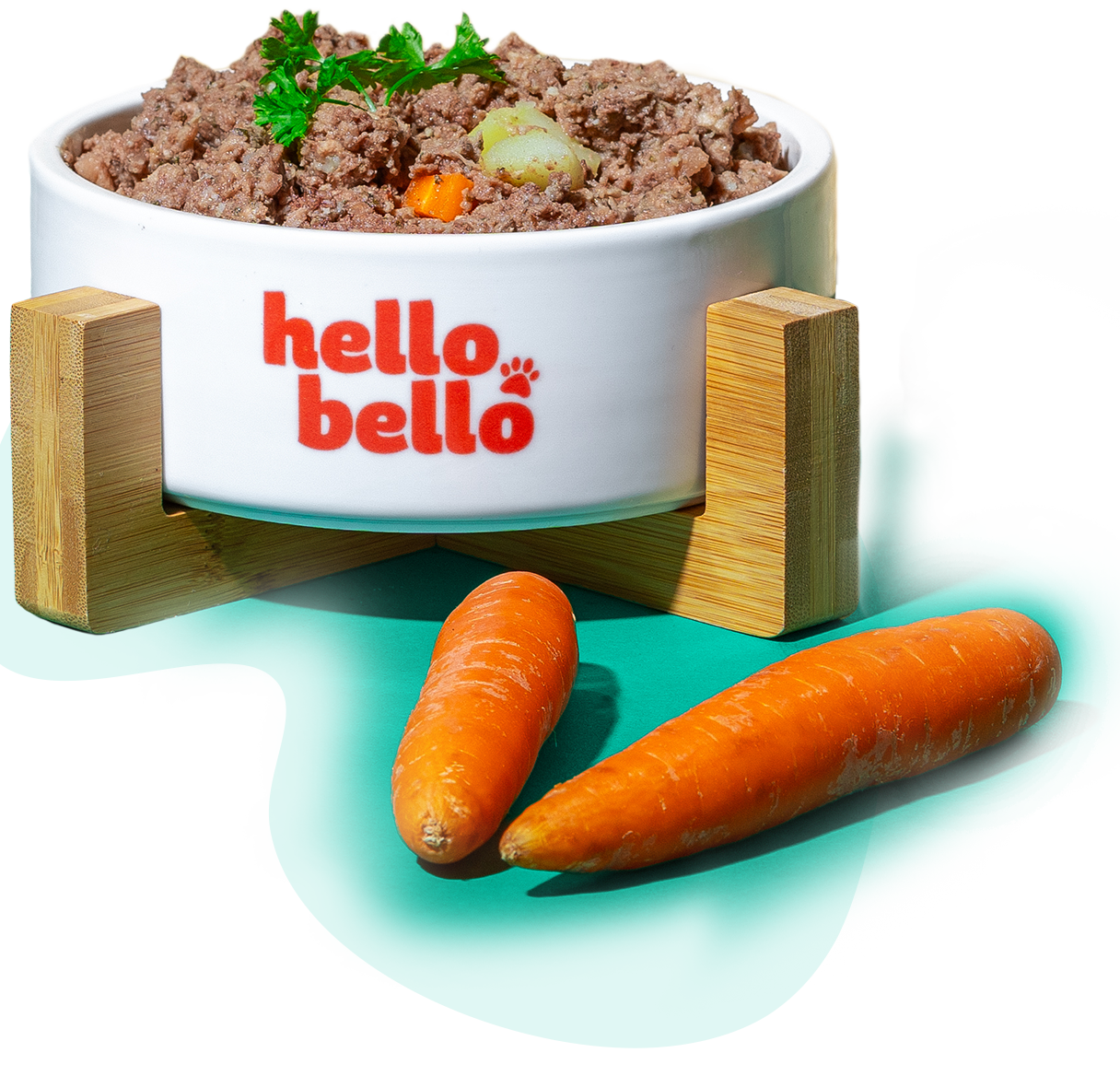
Since it is often difficult in everyday life to cook fresh regularly yourself, a ready-made fresh food subscription like HelloBello can be a practical alternative.
HelloBello Fresh Food: The Ideal Labrador Diet
HelloBello Fresh Food is developed by veterinarians, consists of fresh, high-quality ingredients, and is gently cooked. It provides your dog with important nutrients that can support shiny coat, healthy skin, and a functioning immune system, without artificial additives or inferior fillers. At the same time, the portions can be individually adjusted, which helps you prevent obesity.
- Perfect portion sizes: individually tailored to the weight, age, and activity of your Labrador
- Highly digestible ingredients: gently cooked meat with well-tolerated side dishes and fresh vegetables
- Developed by veterinarians: balanced recipes, you do not have to balance anything yourself
- Without artificial additives: free from unnecessary fillers, therefore well tolerated by many Labradors. For known intolerances, discuss this additionally with your veterinarian.
- Flexible subscription: Recipes and portions can be adjusted as needed

Frequently Asked Questions about Labrador nutrition (FAQ)
How often should I feed my Labrador?
For adult Labradors, two regular meals a day are generally suitable. Puppies need several smaller portions throughout the day, as their stomach is still smaller.
Why are Labradors so prone to obesity?
Labradors have a very pronounced appetite, which is also genetically determined in some of the population. Without controlled food intake and sufficient exercise, they therefore easily gain weight (Raffan et al., 2016).
Which foods are toxic to Labradors?
Chocolate, walnuts, raisins, grapes, garlic, onions and mushrooms are among the forbidden foods. Even small amounts can cause serious poisoning.
What happens if a Labrador is chronically overfed?
In addition to obesity, the long-term risk of secondary diseases such as osteoarthritis or diabetes increases. A well-known long-term study showed a lower risk of osteoarthritis and a higher life expectancy in Labradors fed just enough to meet their needs (Kealy et al., 2002).
Can I barf my Labrador?
Yes, but only with precise knowledge of its nutrient requirements and ideally in consultation with your veterinarian, as even self-prepared rations are often unbalanced.
Is HelloBello fresh food suitable for Labradors?
Yes. HelloBello is developed by veterinarians, gently cooked and can be individually tailored to your Labrador's weight, age and activity level, which is particularly helpful given its tendency to obesity.

Conclusion: Labrador nutrition that suits a bundle of energy
A Labrador is easygoing by nature, but demanding when it comes to food quantity. Controlled portions, high-quality ingredients with a high meat content and regular exercise make the difference between a dog that is merely full and one that stays truly healthy and fit. Keep a regular eye on your Labrador's weight, coat and stool consistency and always speak to your veterinarian if any concerns persist.

Anita Lorber
Sources:
- Cortinovis, C., & Caloni, F. (2016). Household food items toxic to dogs and cats. Frontiers in Veterinary Science, 3, 26. https://doi.org/10.3389/fvets.2016.00026
- Freeman, L. M., Chandler, M. L., Hamper, B. A., & Weeth, L. P. (2013). Current knowledge about the risks and benefits of raw meat-based diets for dogs and cats. Journal of the American Veterinary Medical Association, 243(11), 1549–1558. https://doi.org/10.2460/javma.243.11.1549
- Kealy, R. D., Lawler, D. F., Ballam, J. M., Mantz, S. L., Biery, D. N., Greeley, E. H., Lust, G., Segre, M., Smith, G. K., & Stowe, H. D. (2002). Effects of diet restriction on life span and age-related changes in dogs. Journal of the American Veterinary Medical Association, 220(9), 1315–1320. https://doi.org/10.2460/javma.2002.220.1315
- Raffan, E., Dennis, R. J., O’Donovan, C. J., Becker, J. M., Scott, R. A., Smith, S. P., Withers, D. J., Wareham, N. J., Farooqi, I. S., & O’Rahilly, S. (2016). A deletion in the canine POMC gene is associated with weight and appetite in obesity-prone Labrador retriever dogs. Cell Metabolism, 23(5), 893–900. https://doi.org/10.1016/j.cmet.2016.04.012
Ready to give your dog a healthier and longer life?
Order gluten-free dog food now and 30 % save!
Order now